
Minnesota Renter’s Credit: Your Complete Guide to Claiming Your Property Tax Refund

Illustration representing Minnesota renters receiving property tax refunds up to $2,720 through the Renter's Credit program

Did you know that as a Minnesota renter, you could be leaving hundreds—even thousands—of dollars on the table each year? The Minnesota Renter’s Credit is one of the most valuable yet underutilized benefits available to tenants in the Twin Cities and throughout the state. With refunds reaching up to $2,720, understanding how to claim this credit could put significant money back in your pocket.

At Apartment Resource Group, we’ve spent over 20 years helping renters throughout St. Paul, Minneapolis, and the greater Twin Cities area find their perfect home. Part of our commitment to exceptional service means ensuring our residents understand every benefit available to them—including this valuable tax credit that many Minnesota renters miss out on each year.

Whether you’re renting an apartment in St. Paul, a townhome in Bloomington, or a unit anywhere across Minnesota, this comprehensive guide will walk you through everything you need to know about claiming your Minnesota Renter’s Credit in 2025.


What Is the Minnesota Renter’s Credit?

The Minnesota Renter’s Credit (formerly known as the Renter’s Property Tax Refund) is a refundable tax credit designed to provide property tax relief to Minnesota renters. When you pay rent, a portion of that payment goes toward the property taxes on the building where you live. The state of Minnesota allows eligible renters to reclaim some of this money based on their income and the amount of rent they paid during the year.

According to the Minnesota Department of Revenue, to qualify for this credit, you must have:

  • Lived in and paid rent on a Minnesota building where the owner was assessed property tax or made payments in lieu of property tax
  • Household income below $77,570
  • Not been claimed as a dependent on someone else’s tax return

The maximum credit available is $2,720—a substantial amount that could help cover moving expenses, build your emergency fund, or simply ease your monthly budget.


Major Changes for 2025: What You Need to Know

Important Update: Starting with 2024 taxes (filed in 2025), the process for claiming the Minnesota Renter’s Credit has changed significantly. Previously, renters filed a separate Renter’s Property Tax Refund return (Form M1PR). Now, you claim the Renter’s Credit as part of your Minnesota Individual Income Tax return (Form M1).

This change means:

  • No more separate filing – The credit is now integrated into your regular state tax return
  • Earlier refunds – You’ll receive your renter’s credit along with any income tax refund, rather than waiting until later in the year
  • New forms required – You’ll need to complete Schedule M1RENT and Schedule M1REF along with your Form M1

As the Minnesota Department of Revenue explains, “Starting with your 2024 taxes, if you are a renter, you can claim the Renter’s Credit as part of your Minnesota Individual Income Tax return (Form M1). You will no longer file a Renter’s Property Tax Refund return (Form M1PR).”
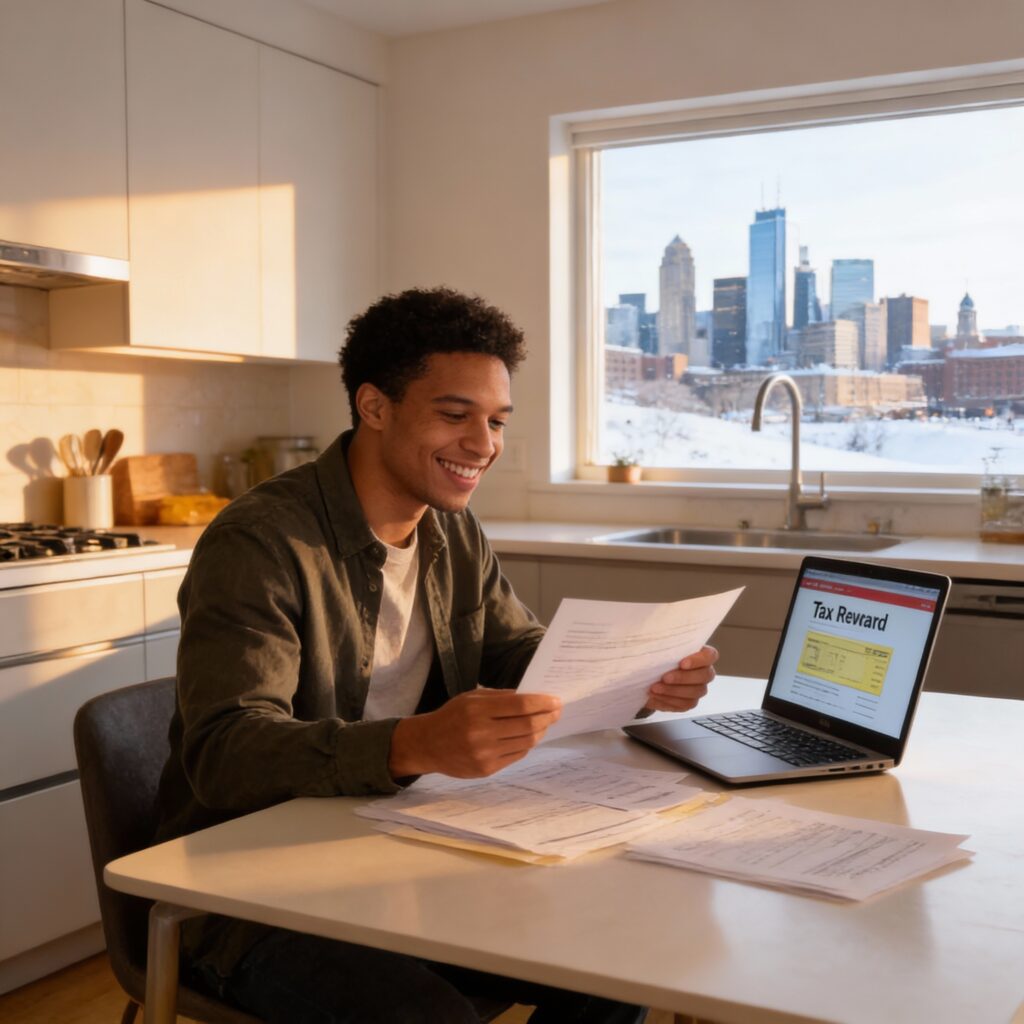

Minnesota renter reviewing tax documents to claim the Renter's Credit refund in a modern Twin Cities apartment

Understanding Your Certificate of Rent Paid (CRP)

The Certificate of Rent Paid (CRP) is the essential document you need to claim your Minnesota Renter’s Credit. This form shows how much rent you paid during the previous year and is provided by your landlord or property manager.

Key CRP Facts:

  • Deadline for landlords: Your property owner or managing agent must give you a completed CRP by January 31 of each year
  • What it contains: The amount of rent you paid and the rental period
  • Electronic or paper: Landlords can provide the CRP as either an electronic or hard copy

What If You Don’t Receive Your CRP?

If your landlord fails to provide your CRP by February 1, don’t panic. You have options:

  1. Contact your landlord – Call or write to remind them of their legal obligation. Landlords can be fined $100 for each CRP not provided.
  2. Request a Rent Paid Affidavit (RPA) – If you cannot get a CRP from your property owner, you can request an RPA from the Minnesota Department of Revenue starting February 1 each year.

According to LawHelp Minnesota, “If your landlord does not give you the CRP, call the landlord and remind them that they can be fined $100 for each CRP not provided.”

At Apartment Resource Group, transparency is one of our core values. Our residents can always count on receiving their CRP documents on time, and our team is available to answer any questions about the process.


Step-by-Step Guide: How to Claim Your Minnesota Renter’s Credit

Step 1: Gather Your Documents

Before you begin, make sure you have:

  • Your Certificate of Rent Paid (CRP) from your landlord
  • Your income information (W-2s, 1099s, etc.)
  • Your Social Security Number or Individual Taxpayer Identification Number (ITIN)

Step 2: Determine Your Eligibility

You may be eligible for the Renter’s Credit if:

  • You rented a home in Minnesota during the tax year
  • The building owner paid property taxes (or payments in lieu of property tax)
  • Your household income is below the threshold ($77,570 for 2024 taxes)
  • You are not claimed as a dependent on someone else’s return

Step 3: Complete the Required Forms

For electronic filing: Use tax software to file your Minnesota income tax return online. The software will guide you through entering your CRP information on Schedule M1RENT.

For paper filing: Download and complete:

  • Form M1 (Minnesota Individual Income Tax Return)
  • Schedule M1REF
  • Schedule M1RENT

Mail your completed return with copies of all your CRPs to: Minnesota Revenue Mail Station 0010 600 N. Robert St. St. Paul, MN 55146-0010

Step 4: File by the Deadline

The deadline for filing your Minnesota income tax return (including the Renter’s Credit) is April 15, 2025 for 2024 taxes.


Tax preparation documents and tools needed to file for the Minnesota Renter's Credit including Form M1 and Schedule M1RENT

Calculating Your Potential Refund

The amount of your Renter’s Credit depends on your household income and the amount of rent you paid. Generally, lower-income renters receive larger credits.

Income Considerations

Your household income for the renter’s credit is your adjusted gross income minus certain subtractions. If you’re married filing separately, your household income includes your spouse’s income while you were married and living together.

Subtractions That Can Increase Your Refund

Certain subtractions can help you qualify for a larger refund:

  • Dependents living with you
  • Age 65 or older (born before January 2, 1960)
  • Disability-related subtractions

According to the Minnesota House of Representatives, “For tax year 2024 credit claims paid in 2025, the maximum refund is $2,640. Renters whose income exceeds $75,389 are not eligible for refunds.”

Special Situations: FAQs for Minnesota Renters

What if I moved during the year?

If you rented more than one unit during the year, you’ll need a CRP from each property. Combine the rent amounts from all CRPs when claiming your credit.

What if I’m married and we rent separate places?

According to the Minnesota Department of Revenue, “If you lived separately the entire year, you would claim the Renter’s Credit using the renter’s income and their CRP on Schedule M1RENT.”

I already filed without claiming the credit—now what?

If you missed claiming the Renter’s Credit on your original return, you must amend your return. File Form M1X along with Schedule M1REF and Schedule M1RENT.

Do I need to file even if I’m not required to file taxes?

Yes! Even if you’re not required to file a federal or state income tax return, you must file both returns to claim the Renter’s Credit.

What about mobile home residents?

If you rent a mobile home and receive a CRP for renting plus a separate CRP for lot rental, claim the Renter’s Credit on Form M1 using Schedule M1RENT and combine rent amounts from both CRPs.

Common Mistakes to Avoid

1. Missing the Deadline

Don’t wait until the last minute. Give yourself plenty of time to gather documents and file correctly.

2. Not Requesting Your CRP Early

If you haven’t received your CRP by early February, contact your landlord immediately. The longer you wait, the more complicated it becomes.

3. Forgetting About Multiple Residences

If you moved during the year, you need CRPs from ALL rental properties where you lived.

4. Incorrect Income Reporting

Make sure your household income calculation is accurate, including any subtractions you qualify for.

5. Filing the Wrong Form

Remember: Starting in 2025, you claim this credit on your regular income tax return (Form M1), NOT the old Form M1PR.


Resources and Help

Free Tax Preparation Assistance

If you need help preparing your taxes, you may qualify for free assistance through:

  • Volunteer Income Tax Assistance (VITA) – For qualifying taxpayers
  • AARP Tax-Aide – For older taxpayers

The Minnesota Department of Revenue offers a tool to find free tax preparation help in your area.

Helpful Links


Why Understanding Your Renter Rights Matters

At Apartment Resource Group, we believe that informed renters are empowered renters. Understanding benefits like the Minnesota Renter’s Credit is just one part of being a knowledgeable tenant in the Twin Cities.

With over 20 years of experience in property management throughout St. Paul, Minneapolis, Bloomington, Eagan, and surrounding communities, we’ve built our reputation on transparency and exceptional service. Our team is committed to ensuring every resident has the information they need to thrive in their home.

Looking for your next apartment in the Twin Cities? Browse our available properties or contact us to learn more about how we support our residents.


Key Takeaways

✅ The Minnesota Renter’s Credit can provide refunds up to $2,720

✅ Starting in 2025, claim the credit on your regular Form M1 income tax return—not the old M1PR

✅ Your landlord must provide your CRP by January 31

✅ File by April 15, 2025 for 2024 taxes

✅ Don’t leave money on the table—even if you’re not required to file taxes, you must file to claim the credit


Need a Great Place to Rent in the Twin Cities?

Apartment Resource Group offers quality rental properties throughout the Twin Cities metro area, from St. Paul to Minneapolis, Bloomington to Eagan. Our commitment to transparency means you’ll always receive your CRP on time and have a property management team that truly cares about your experience.

View Available Properties | Learn About Us | Contact Us Today


Disclaimer: This blog post is for informational purposes only and should not be considered tax advice. Tax laws change frequently, and individual circumstances vary. Please consult with a qualified tax professional or the Minnesota Department of Revenue for guidance specific to your situation.

Minneapolis: The Top City for Renters to Watch in 2025

Minneapolis: The Top City for Renters to Watch in 2025

Minneapolis has emerged as the top city for renters to watch in 2025, solidifying its reputation as a rental activity hotspot. According to RentCafe’s recent report, the city secured the #1 spot seven times throughout the past 12 months, indicating a significant surge in rental interest.

Key Factors Contributing to Minneapolis’s Appeal

1. Affordability

The average rent for an apartment in Minneapolis is $1,680, which is below the national average of $1,748. This affordability makes it an attractive option for renters seeking quality housing without breaking the bank (RentCafe). Additionally, the city offers various housing assistance programs for low-income residents (Minnesota Housing).

2. Quality of Life

Minneapolis parks and quality of life for renters

Minneapolis offers a high quality of life, with a vibrant cultural scene, numerous parks, and recreational activities. The city’s commitment to green spaces and community events enhances its livability, making it a desirable place for renters. Minneapolis ranks among the top cities for biking and outdoor activities (PeopleForBikes) and has an extensive public transit system (Metro Transit).

3. Economic Opportunities

The city boasts a diverse economy with strong job markets in sectors like healthcare, finance, and technology. This economic stability attracts professionals seeking both career opportunities and comfortable living arrangements. Major companies like Target, Best Buy, and UnitedHealth Group are headquartered in the area (Minneapolis Regional Chamber).

4. Educational Institutions

University of Minnesota area renting opportunities for students through Apartment Resource Group

Home to reputable institutions like the University of Minnesota, Minneapolis draws students and academics, contributing to a dynamic rental market. The city also has a strong network of community colleges and trade schools, making it an ideal location for students seeking affordable education options (Minnesota State Colleges and Universities).

5. Urban Development

Recent urban development projects have revitalized various neighborhoods, offering modern amenities while preserving the city’s historic charm. Minneapolis has also prioritized sustainable housing developments, including LEED-certified buildings and energy-efficient apartment complexes (Minneapolis Sustainability).

Neighborhoods to Watch

  • North Loop: Known for its trendy boutiques, restaurants, and renovated warehouses, North Loop has become a hotspot for young professionals.
  • Uptown: With its lively entertainment scene and proximity to lakes, Uptown remains a favorite among renters seeking a blend of nature and nightlife. Check out our recent Uptown properties HERE!
  • Northeast Minneapolis: This area offers a mix of art galleries, breweries, and diverse dining options, appealing to those looking for a vibrant community. Yep, we even have some Nordeast Minny properties HERE!

As we move into 2025, Minneapolis’s and surrounding areas combination of affordability, quality of life, and economic opportunities positions it as a prime city for renters to consider. Whether you’re a young professional, a student, or someone seeking a community-oriented environment, Minneapolis offers a diverse range of options to suit various lifestyles.

36 Important Questions to Ask When Renting an Apartment

36 Questions to Ask When Renting an Apartment

From apartment amenities to fees and contracts, there are plenty of questions that need answers before signing a lease agreement, especially if you’re renting for the first time.

1. How Much Is the Rent?

One of the most important questions to ask when touring an apartment is regarding rent. Although it’s not the norm, ask if there’s anything in the lease about raising the rent during your rental term.

If you found your apartment online and there was a rental price listed, confirm with the landlord that that price is accurate. You can also request a quote if your apartment offers a variety of optional features or floor plans.

2. How Do I Pay Rent?

Another important question to ask a landlord is how to pay your rent. It’s still common for landlords to require a check or money order, especially in for-rent-by-owner units. However, more and more apartment complexes accept credit cards or ACH transfer through an online portal.

3. How Much Is the Security Deposit?

Your security deposit (ask about our FREE security deposit options) is a significant expense and should be addressed before signing a lease. While the amount will vary, it usually lies between one to three months of rent. If you’re trying to save money when leasing an apartment, look for move-in specials on Apartment List that may include waived or discounted deposits.

4. Do You Charge Other Move-In Fees?

Add move-in fees to your list of questions to ask when looking at an apartment. Aside from your security deposit, you’ll need to pay an application fee, first and last month’s rent, pet deposits, and a background check. These fees are often rolled into one move-in fee and may include a utility hook-up fee.

5. How Soon Are You Looking to Fill the Unit?

Asking a prospective landlord how soon they are looking to fill the unit can help provide you with a timeline you need to start planning your move. If a landlord is eager to fill the unit quickly, you might be able to negotiate some of the lease agreement terms.

6. What Utilities Are Included in the Rent?

Add utilities to your questions to ask when apartment hunting to get the full scope of your expenses. Sometimes all utilities are rolled into the rent, but you’ll likely pay for electricity, cooking gas, and extras like WiFi and cable. In many cases, landlords do pay for water, waste, and garbage. They may cover these in full or bill you as part of your monthly rent statement.

7. What Utility Companies Service the Area?

Once you clarify what utilities you’ll be personally responsible for when asking your apartment hunting questions, figure out who to pay and how to pay them. Find out what service providers the complex uses for electricity, gas, and internet before you move in to schedule them to be turned on.

Utilities can be turned on by calling the company that services your area and letting them know your move-in date. You may be asked to undergo a soft credit check to determine if you need to pay a deposit, and you will be given information about how and where to make your monthly payments.

8. What’s Your Late Fee Policy?

During your apartment viewing, ask about the late fee policy. It’s always best to pay rent on time to avoid fees and secure a good rental reference if you ever move somewhere else. But, of course, emergencies can arise where you have to pay rent late, so you should know about late fees before moving in.

9. Are Early Lease Terminations Allowed?

Even if you have no plans to move soon, asking about an early lease termination is wise. You could end up with a new job or decide to live in another neighborhood. In most cases, you’ll pay a penalty for ending your lease early. There are some situations where you may be able to end your lease early without penalty.

10. What’s Your Subletting Policy?

Subletting is another one of the things to ask when renting an apartment. If you or a roommate ever want to move without paying a penalty for a lease termination, you may be able to sublet. It’s also a great way to cover your rent if you ever want to travel for a while.

11. Is There Parking Available?

Parking is often challenging for renters, especially when renting in downtown neighborhoods. Your apartment questions should include how much parking costs, the parking policy, and if there’s a waitlist. Look for apartments with secured, gated garages, underground parking, and assigned spots to ensure you always have a place to park. (several of our units of garage and or underground parking check them out here.)

12. Do You Have a Pet Policy?

The pet policy should be on the top of your list of what to ask when looking at apartments. Renting with pets can introduce new challenges, and many apartment pet policies can be complicated. First, ask if the building is pet-friendly and what pets are allowed. Many landlords have breed restrictions or weight limits for dogs, so ensure your breed is cleared.

Almost all our properties are pet friendly, so you really shouldn’t have any trouble finding a place fro you and your furry friends!

13. What’s the Pet Deposit/Pet Fee?

If your pet is allowed, ask about any required pet fees, like monthly pet rent or a pet deposit. All our pet fees are included in the description of our online properties!

14. What’s the Application Process?

Each apartment complex may have a slightly different application process. Ask how long it usually takes to get approved for an apartment, any fees, and the next steps. You can get a full rundown of the process by clicking on any “apply” button on our properties page.

15. Are There Any Income or Credit Requirements?

Other questions to ask before renting should include income or credit requirements. Landlords will often only consider applicants with a gross monthly income of 3x the monthly rent and require proof of income.

Your credit score will likely play a role in your apartment application, and while most landlords require a minimum credit score for an apartment of 650, it can vary. A credit check is usually a part of the application process, so be sure to ask before signing a lease.

16. Will My Rent Ever Increase?

If you plan to settle in one apartment for the foreseeable future, ask about any potential changes when you renew your lease.

If you are in it for the long haul, you probably don’t want to live in a place that regularly raises its rent prices. So keep in mind the long-term when figuring out what things to ask when renting an apartment.

17. What Are My Lease Length Options?

A 12-month lease is the standard lease length, but other lease options may be available. Your apartment questions should include info on short-term leases, such as 6-month or 9-month leases, which could benefit you if you’re moving to a new city and getting to know the area. Remember that short-term and month-to-month leases provide the most flexibility but come at the highest price.

18. Is There an Application Fee?

Apartment application fees are usually around $50 to $74, with an average fee of $51. If you need to move quickly, ask how long it typically takes for an application to be approved.

Some landlords also want references to go with your application. Your previous landlords are the best rental reference, but a close friend or colleague will also work if you don’t have a rental history.

19. Is Renters Insurance Required?

Asking about whether or not you need renters’ insurance is among the most important questions to ask before signing a lease. Your landlord may also require it as part of your apartment application to be approved.

You should strongly consider renters insurance, even if it’s not a requirement. It’s a relatively cheap monthly cost that could be lifesaving. For example, renters insurance will cover the cost of your possessions that may have been lost or damaged due to burglary, fires, vandalism, etc., and typically only costs around $15-$30 a month.

20. What Amenities Are Included?

Amenities are among the biggest perks of apartment living and should be part of your apartment viewing. Pools and gyms are common in apartment complexes, but luxury complexes can also offer things like co-working spaces and private dog parks.

Amenities may increase your rent, but you can also think about the financial implications, like canceling your gym membership and impacting the question, “how much rent can I afford?”

21. Is There Storage Space Available?

Your questions to ask an apartment complex should include whether or not storage space is available. Inquire about the storage size, wait lists, how secure it is, and how much it costs. You may be able to rent a smaller apartment with free, on-site storage.

22. What Appliances Are Included?

When figuring out what to ask when looking at apartments, it’s not always obvious to think about appliances. Most apartments will come standard with a fridge, oven, and stove. However, not all apartments come with microwaves, dishwashers, or laundry, which could be a deal breaker for you.

23. How Do I File Maintenance Requests?

Maintenance requests can be a big headache without a responsive landlord and system. Ask how they’re handled and how long they usually take. Smaller units or private condos may take some time to see repairs, but a larger apartment complex may come with a 24/7 maintenance team. (We offer 24/7 emergency maintenance for most of our properties CALL 612-448-9848)

24. What Maintenance Repairs Are Covered in Lease Agreements?

Which repairs are covered should also be part of what questions to ask when renting an apartment. Most states require landlords to keep a rental unit in a habitable condition, including ensuring your electricity, heat, and water are working. Landlords typically cover wear and tear costs, like broken locks, but don’t pay for things you or your guests break.

25. What’s the Guest Policy?

Some apartments have a guest policy to avoid people moving in and staying indefinitely without a lease. Property managers may also want to avoid too many guests taking advantage of communal amenities, like the swimming pool or gym. Ask about any rules relating to guests and how long they can stay.

26. Where Are Guests Allowed to Park?

If you’re unsure what questions to ask when renting an apartment, add guest parking to your list. If parking is at a premium, guests can get towed when visiting. Plus, some apartment buildings also have areas reserved for guests away from the premium spots.

27. Is There Apartment Security?

Your safety is integral to your well-being, so make sure to consider it before you move. Ask about any apartment security, including in-unit alarm systems, deadbolts, or someone who monitors the lobby. Ask how safety issues are resolved, such as broken locks or poor lighting in common areas.

28. Do I Need a Cosigner or Guarantor?

Depending on your situation, you might need a consignor or a lease guarantor that is legally responsible for paying your rent if you can’t do it yourself. It’s a common request if you don’t meet the apartment’s income requirement or have poor credit. If you need a cosigner or guarantor, ask if you can remove them from the lease once you fulfill the requirements, like building up your credit.

29. How Much Notice Am I Required to Give Before Moving Out?

Moving out should be included in what to ask when renting an apartment. You may be required to give 30 days notice in writing or incur a fee or penalty. Even short-term leases, such as month-to-month, may require a few weeks’ notice.

30. How Much Notice Must the Landlord Give Me If They Terminate or Cancel My Lease?

Just like you need to give notice if you move out, your landlord must also let you know if they want to terminate or cancel your lease. Ask how much notice they give and how. For example, they may send a registered letter or request a meeting.

31. What Are the Penalties for Breaking My Lease Early?

Even if you love the complex you’re touring, you may need to break a lease at some point due to a job change. Most leases will include penalties for breaking your lease early, so ensure this is among the questions to ask when viewing an apartment. You may have to forfeit your security deposit or pay additional fees to break the lease.

32. Are There Any Plans to Renovate the Building?

It’s never fun moving into a building and immediately dealing with renovations, noise, and construction activity. Ask if there are any plans to renovate the building or individual units. You may decide it’s worth the trade-off if it involves a new rooftop terrace or an update to the pool.

33. Is There Public Transportation Nearby?

Public transportation (Minneapolis/St. Paul Public Trans maps & schedules) should always be on your list of questions to ask about apartments. It could dramatically reduce your car or rideshare budget and improve your commute time. Even if you don’t think there’s a subway or bus in the area, you may learn there’s a special shuttle for major stops and attractions.

34. What Changes Can I Make to My Apartment?

Leasing an apartment should offer some flexibility to make it your own. Ask if you can make any changes, from painting to putting up a wall to divide an oversized room. Landlords usually have a list of approved paint colors or changes but may amend your lease if your request is reasonable.

35. What’s the Neighborhood Like?

If you are new to the area, ask about the neighborhood, including the safety ratings, nearby hotspots, and the overall vibe. Then, outside of your landlord’s knowledge, do some research on your own! Check out the neighborhood’s popular restaurants, bars, and nearby parks.

36. Would You Live Here?

Lastly, ask your prospective landlord’s opinion on whether they would live there. They’ll probably say yes right away, but you should always ask them to elaborate on why.

Find out what they love about the apartment and what they wished was different. These questions can help provide some honest clarity before leasing an apartment.

We hope these questions will help you gather the essential information needed to make an informed decision when renting an apartment.

Crafting a Budget-Friendly Apartment Oasis

Crafting-a-Budget-Friendly-Apartment-Oasis at Apartment Resource Group

Introduction: Creating a cozy and stylish apartment doesn’t have to break the bank. With a dash of creativity and resourcefulness, you can transform your living space into a haven that reflects your personality without draining your wallet. In this post, we’ll explore some ingenious DIY decor ideas and money-saving hacks to furnish and decorate your apartment on a budget, from savvy thrift store finds to innovative repurposing projects.

  1. Embrace the Thrift Store Treasure Hunt:

    One person’s unwanted item is another’s hidden gem. Thrift stores are gold mines for budget-conscious decorators. Explore thrift shops in your area for unique pieces of furniture, decor, and accessories at a fraction of the cost of buying new. Look for solid wood furniture that can be easily refinished or painted to suit your style. Vintage mirrors, artwork, and decorative items can add character and charm to your space without breaking the bank.
  2. Get Crafty with DIY Projects:

    Unleash your inner artist and tackle some fun DIY projects to personalize your apartment decor. Create your own artwork using inexpensive supplies like canvas, paint, and stencils. Frame fabric remnants or old scarves to make unique wall art. Upcycle old furniture with a fresh coat of paint or new hardware for a custom look. Repurpose everyday items into stylish decor pieces, like turning old wine bottles into chic vases or using mason jars as candle holders. The possibilities are endless when you let your creativity run wild.
  3. Repurpose and Reimagine Furniture:

    Instead of splurging on brand new furniture, give new life to old pieces by repurposing them in unexpected ways. Turn an old wooden ladder into a stylish bookshelf or blanket rack. Transform vintage crates into versatile storage solutions or coffee tables. Reupholster worn-out chairs with budget-friendly fabric for a fresh look. Don’t be afraid to think outside the box and experiment with unconventional furniture arrangements to maximize space and functionality in your apartment.
  4. Shop Smart for Budget-Friendly Decor:

    When shopping for decor items, keep an eye out for sales, clearance items, and discount stores to score big savings. Take advantage of seasonal promotions and holiday sales to snag decor essentials like rugs, throw pillows, and curtains at discounted prices. Comparison shop online to find the best deals on home decor accessories and furniture. Consider joining loyalty programs or signing up for newsletters from your favorite home decor stores to receive exclusive discounts and offers.
  5. Let Nature Be Your Decorator:

    Bring the beauty of the outdoors inside by incorporating natural elements into your apartment decor. Decorate with potted plants, succulents, and fresh flowers to add color, texture, and life to your space. Create your own mini indoor garden with herbs, cacti, and air plants in affordable planters or repurposed containers. Not only will greenery breathe new life into your apartment, but it will also purify the air and promote a sense of well-being.

Conclusion: Creating a budget-friendly apartment that reflects your style and personality is entirely achievable with a little creativity and ingenuity. By embracing thrift store finds, tackling DIY projects, repurposing furniture, shopping smart for decor, and incorporating natural elements, you can transform your living space into a stylish oasis without breaking the bank. With these money-saving hacks, you’ll have everything you need to design the apartment of your dreams on a shoestring budget. Happy decorating!

Renter’s Insurance Demystified: Smart Ensure

Renting a home or apartment comes with its own set of responsibilities, and one crucial aspect that often gets overlooked is renter’s insurance. Many tenants underestimate the importance of this coverage, leaving themselves vulnerable to potential financial losses. In this blog post, we’ll demystify renter’s insurance, exploring why it’s essential and let you know why we use our own internal Smart Ensure option.

Understanding Renter’s Insurance

1. What is Renter’s Insurance?

Renter’s insurance is a type of coverage designed specifically for tenants. Unlike homeowners insurance, which covers the structure of the property, renter’s insurance focuses on protecting the renter’s personal belongings and liability.

2. Why Do You Need Renter’s Insurance?

Protection for Personal Property: Renter’s insurance safeguards your personal belongings, such as furniture, electronics, clothing, and more, against perils like fire, theft, vandalism, or natural disasters.

Liability Coverage: This insurance also provides liability coverage, protecting you in case someone is injured in your rental unit and you’re found responsible. It can help cover medical expenses and legal fees.

Temporary Living Expenses: If your rented home becomes uninhabitable due to a covered event, renter’s insurance may cover temporary living expenses, such as hotel costs or rental payments.

3. We use FolioGuard Smart Ensure

Smart Ensure Liability To Landlord Insurance coverage provides residents with a low cost option to meet lease requirement. Renters who want coverage of their own possessions can always choose to purchase their own renters insurance and provide proof of coverage which is easily tracked in our AppFolio Property Manager. Renter insurance made easy! Here is link to our Smart Ensure Resident Information Sheet.